


The Holly Wears The Crown
4 December 2023 | By Red Landscaping
Dotted throughout Wiltshire’s stunning landscapes lies an evergreen treasure—the holly tree. Its rich history, enduring symbolism, and versatile applications have firmly rooted it in the hearts and landscapes of both folklore and practicality.
The holly’s story is woven throughout history, with its roots delving deep into ancient traditions and beliefs. Revered by various cultures, this resilient tree has been celebrated for centuries. Druids saw it as a symbol of everlasting life, while Romans used holly during their Saturnalia festivities—a precursor to the modern Christmas celebration.
Throughout the medieval era, holly retained its significance. Churches adorned with holly leaves and berries during winter symbolized Christ’s crown of thorns. Its association with protection against evil spirits led to holly’s popularity in home decor during Yuletide festivals.
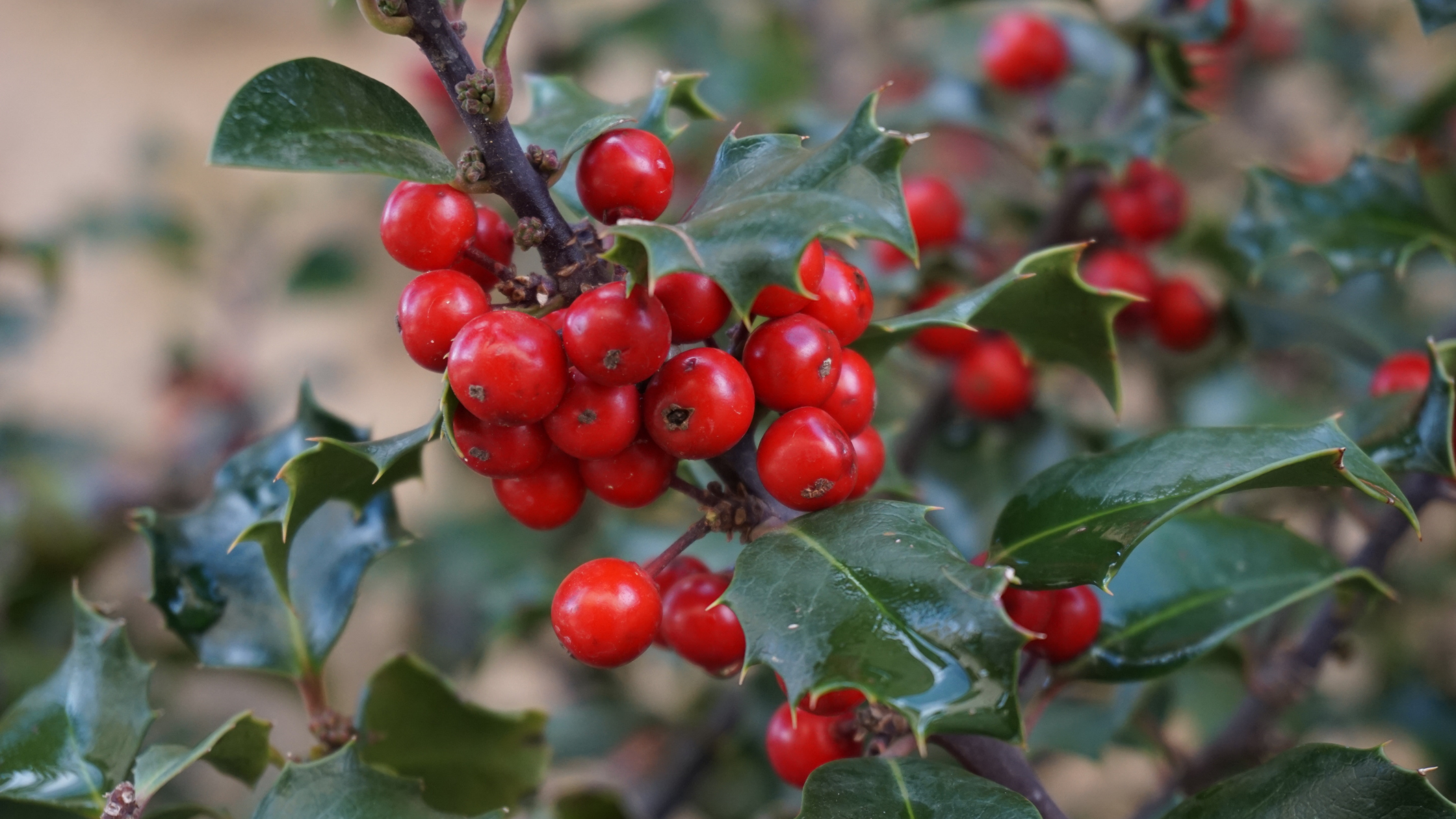
Beyond its historical significance, holly captivates admirers with its striking appearance. Glossy, spiky leaves—dark green and radiant—contrast beautifully against the vibrant red berries, evoking a sense of festive cheer during the winter months.
Is it the resilience of the holly tree in adverse conditions that we value the most? Enduuring, steadfast, and resilient against the changing seasons. Its ability to thrive in both sun and shade, along with its adaptability to various soils, endears it to gardeners seeking steadfast beauty in their landscapes.
Apart from its aesthetic appeal, holly serves numerous practical purposes. Its dense foliage provides shelter and nesting spots for birds, contributing to the local ecosystem. Holly’s wood, known for its hardness and pale colour, has historical significance in crafting intricate woodwork and as a component in traditional English sports equipment like bowls and walking sticks.
Holly is welcomed into our homes throughout advent in garlands, wreaths and floral arrangements, a word of warning from a seasoned gardener, wear thick gardening gloves to protect you from the holly’s spikes. It is said in ye olde folklore that the holly tree was seen as a fertility symbol and a charm against witches, goblins and the devil.

In landscaping, holly offers versatile options—whether as a standalone specimen, a hedge for privacy, or as part of mixed borders. Its various cultivars present a spectrum of sizes and shapes suitable for any garden design.
Maintenance advice: Holly tends to grow between 5-15cm a year and you should trim it later Winter to early Spring.
Moreover, holly’s evergreen nature brings life to gardens year-round, serving as a focal point in the bleakest of winters and a backdrop for vibrant spring and summer blooms.
As landscape gardeners in Wiltshire, we respect the timeless allure of the holly tree. May its presence in our gardens serve as a testament to our reverence for tradition, resilience, and the everlasting beauty that nature graciously bestows upon us.
Get in contact if you’d like to add something more in your garden.