


Choosing Between Composite Decks and Patios for Your Outdoor Space
2 July 2024 | By Red Landscaping
Considering transforming your outdoor living space with decking or patio? Both options offer stylish and functional areas for al fresco dining, barbecues, stargazing, and entertainment. But which is the right choice for you—composite decking or a paved patio?
We only use Millboard decking for our designs, which we believe is the most trusted and reliable decking in the industry. Moulded from real oak, Millboard decking is highly slip-resistant which makes it a safe and reliable feature, and its easy-to-maintain structure means that it’s the ideal feature for those with limited time or mobility. Millboard decking is also resistant to rot and split, meaning that your decking will be durable and will withstand all weather well. You can read more about it here.
Understanding the Difference
The primary differences between patios and decks lie in their materials and construction. Patios are usually constructed from heavy paving materials like concrete, natural stone, or porcelain tiles, set on a flat, stable base. Visit our website to see some of the materials we have used in our installed patios. (link to website) Composite decks, on the other hand, consist of synthetic materials—recycled plastics mixed with wood fibres—secured with structural joists.
Composite Decks
Materials: Made of 95% recyclable plastic and FSC-certified reclaimed wood fibres.
Lifespan: 25 – 30 years
Advantages:
- Versatile construction: can be built on the ground, elevated, or as a balcony.
- Extremely low maintenance and durable.
- Available in various colours and wood-inspired finishes.
- Resistant to UV rays, insects, moss, and algae.
- Eco-friendly and sustainable.
Disadvantages:
- Potential weight restrictions.
- Higher cost compared to timber decking.
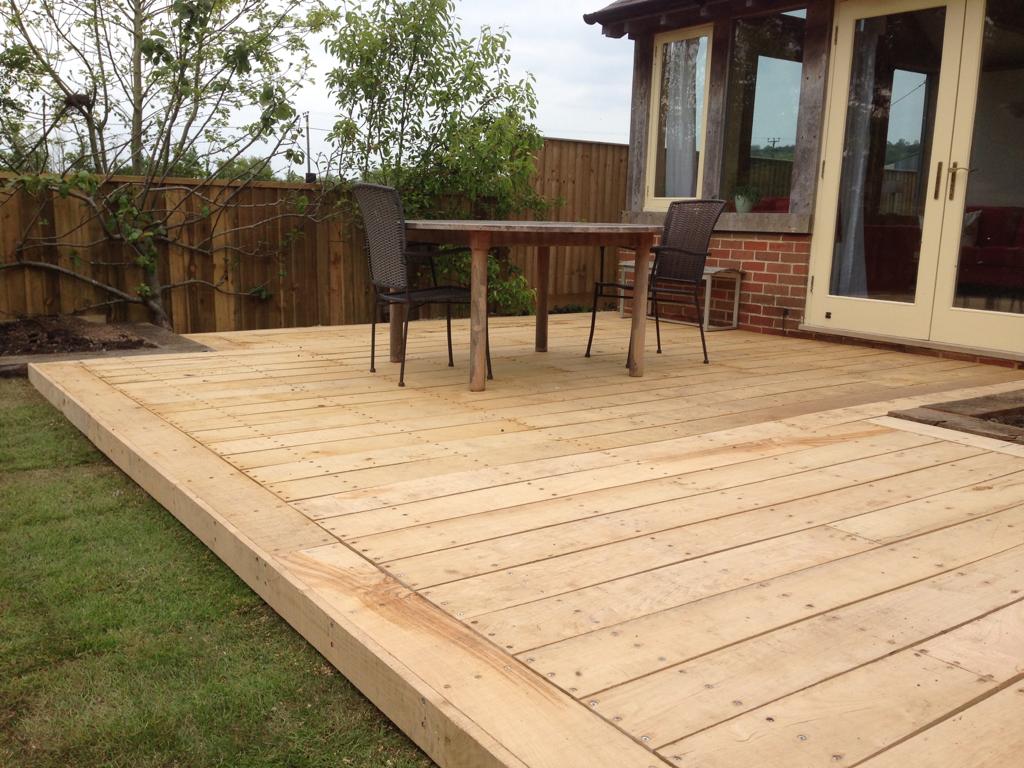
Patios
Materials: Concrete, bricks, natural stone (sandstone, limestone), reconstituted stone, porcelain tiles.
Lifespan: 10 years for natural materials; 25 to 30 years for brick or concrete.
Advantages:
- Can support heavy weights.
- Ideal for fire pits and outdoor kitchens due to heat resistance.
- Low maintenance compared to timber decking.
- Enhances resale value.
- Wide variety of designs.
Disadvantages:
- Requires a flat, stable base.
- Susceptible to stains and weed growth.
- More challenging to repair.

Functionality
Patios are best for flat surfaces and areas where fire resistance is paramount, such as outdoor kitchens. They are highly durable but limited to level ground. Composite decks offer flexibility in design and can be built on slopes, making them ideal for creating varied levels and maximising views.
Maintenance
Composite decking requires minimal upkeep—no sanding, painting, or sealing. In contrast, stone patios need periodic cleaning and may require professional maintenance to prevent damage.
Cost Considerations
While composite decking may have a higher upfront cost, it saves money in the long run due to lower maintenance needs. Depending on the material, Patios can vary in cost, with natural stones being more expensive.
Environmental Impact
Composite decking is made from recycled materials and certified sustainable wood, making it an eco-friendly choice. Patios, though durable and natural, can have a higher carbon footprint depending on the stone’s sourcing and transportation.
In conclusion
When choosing between a composite deck and a patio, consider your garden’s layout, maintenance preferences, and budget. Both options have their unique advantages and can significantly enhance your outdoor living space. Ensure you check local planning regulations before starting your project.
For more inspiration or to see our range of composite decking, visit our website or contact us to discuss your project. Let’s create a garden you will love and enjoy for years.